Introducing…
One minute the Thornback ray is splashing around being centre of attention and the next they’re disappearing into the sea bed.
Habitat
Thornback rays live in coastal waters of Europe and the Atlantic coast of western Africa and Mediterranean Sea coast of North Africa. It is native possibly as far south as Namibia and South Africa. Found around the UK and Ireland on clear sandy, muddy and shingle seabed’s and in clear sections of ground in the middle of rocky areas
Appearance
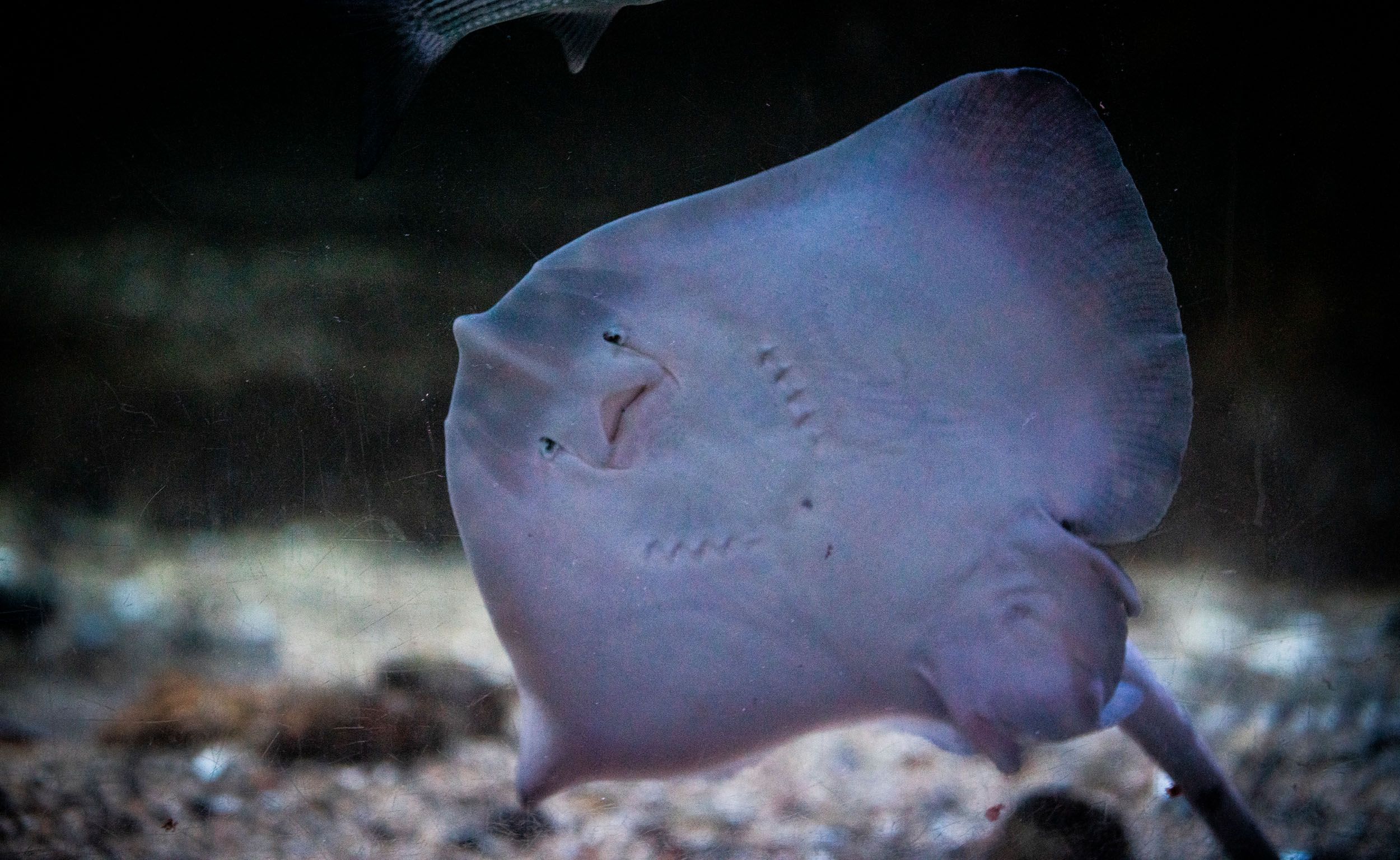
Like all rays, the thornback ray has a flattened body with broad, wing-like pectoral fins. The body is kite-shaped with a long, thorny tail. Their colours vary from light brown to grey with darker blotches and numerous small darker spots and yellow patches This can make them difficult to see when they are sitting on the sea bed.
At Deep Sea World we produce many baby thornback rays that we use to populate our tanks and also send to other aquariums. These babies when hatched .are as small as a 50p and are almost totally translucent. Baby or Juvenile rays are commonly seen on our Access All Areas Tours. However if you look closely at the rockpools or underwater tunnel sea bed you may see some mermaids purses which is what thornback rays use to lay their eggs.
Introducing…
One minute the Thornback ray is splashing around being centre of attention and the next they’re disappearing into the sea bed.

Type
Shark: Camouflaged ambush predators

Size
Max 100cm

What do they eat?
Crustaceans, crabs, shrimps and small fish

Water type
Salt water

Where are we?
Atlantic Ocean, Mediterranean Sea and Black Sea

See us at
Scottish Seas and Rockpools